

Birth is often described as a journey. We prepare our maps, pack our bags, and envision the route we hope to take. We study birth options, write our preferences, and cultivate a vision for our ideal experience. But as many birthing people know, birth has a way of leading us down paths we didn’t plan for. It is a profound, transformative event, and when the unexpected occurs, it can feel as though the ground has shifted beneath your feet.
Perhaps you are faced with a sudden recommendation for a medical intervention you hadn’t considered, or perhaps labor is unfolding differently than you anticipated. In these moments of uncertainty, the atmosphere in the birth room can shift rapidly from one of anticipation to one of pressure and urgency. This is where your doula becomes an anchor. As a birth worker, my role is not to steer the ship, but to hold the lantern while you navigate the waters, ensuring that no matter which path you take, you do so with your eyes open and your autonomy intact.
The Art of Holding Space
When a challenging or unexpected decision arises during labor, the most immediate need is often not more information, but time. Medical environments can feel fast-paced, and it is easy for a labouring person to feel pressured to say "yes" to a recommendation simply to keep the process moving or to alleviate the perceived anxiety of the clinical staff.
As your doula, my first priority is to help you "pause." This looks like a calm, steady presence. I might lean in and ask, “Would you like to take a moment to talk about this?” or “Do you have enough information, or would you like to ask the medical team more questions?” By helping you create a literal and emotional pause, I ensure that you are making a decision from a place of clarity rather than fear. This is "holding space" - a concept that is central to doula work. It means I am physically present, calm, and neutral, allowing you to process your feelings without the pressure to perform or comply immediately. I am there to validate that it is okay to ask for five minutes to think, to pray, to whisper with your partner, or to simply breathe.
A Hypothetical Case Study: The Power of the Pause
To understand how this functions in reality, let us imagine a hypothetical birth scenario. Sarah is in active labor. She had hoped for a spontaneous, unmedicated birth. Suddenly, the medical team expresses concern about a deceleration in the baby’s heart rate and suggests an immediate artificial rupture of membranes (AROM) followed by continuous internal monitoring.
Sarah is suddenly frightened. She is in the throes of a contraction and feels the urgency radiating from the room. She looks to me, her doula.
In this moment, my job is to remain the calmest person in the room. I kneel by her side, maintaining eye contact. I acknowledge her fear: “I see that you’re worried, Sarah. You are doing an incredible job.”
I then turn to the medical provider with a respectful, professional tone: “Sarah would like a moment to process this information. Could you please explain what you are seeing and why you are suggesting this now?”
By facilitating this conversation, I am not opposing the medical team; I am inviting them to involve Sarah as a participant rather than a bystander. I am helping her transition from a state of reactive fear to one of active decision-making.
The BRAIN Tool: Making Informed Decisions
In moments like the one Sarah faced, the BRAIN acronym is an invaluable tool that I introduce to my clients long before they reach the hospital. When a recommendation is made, we walk through this checklist:
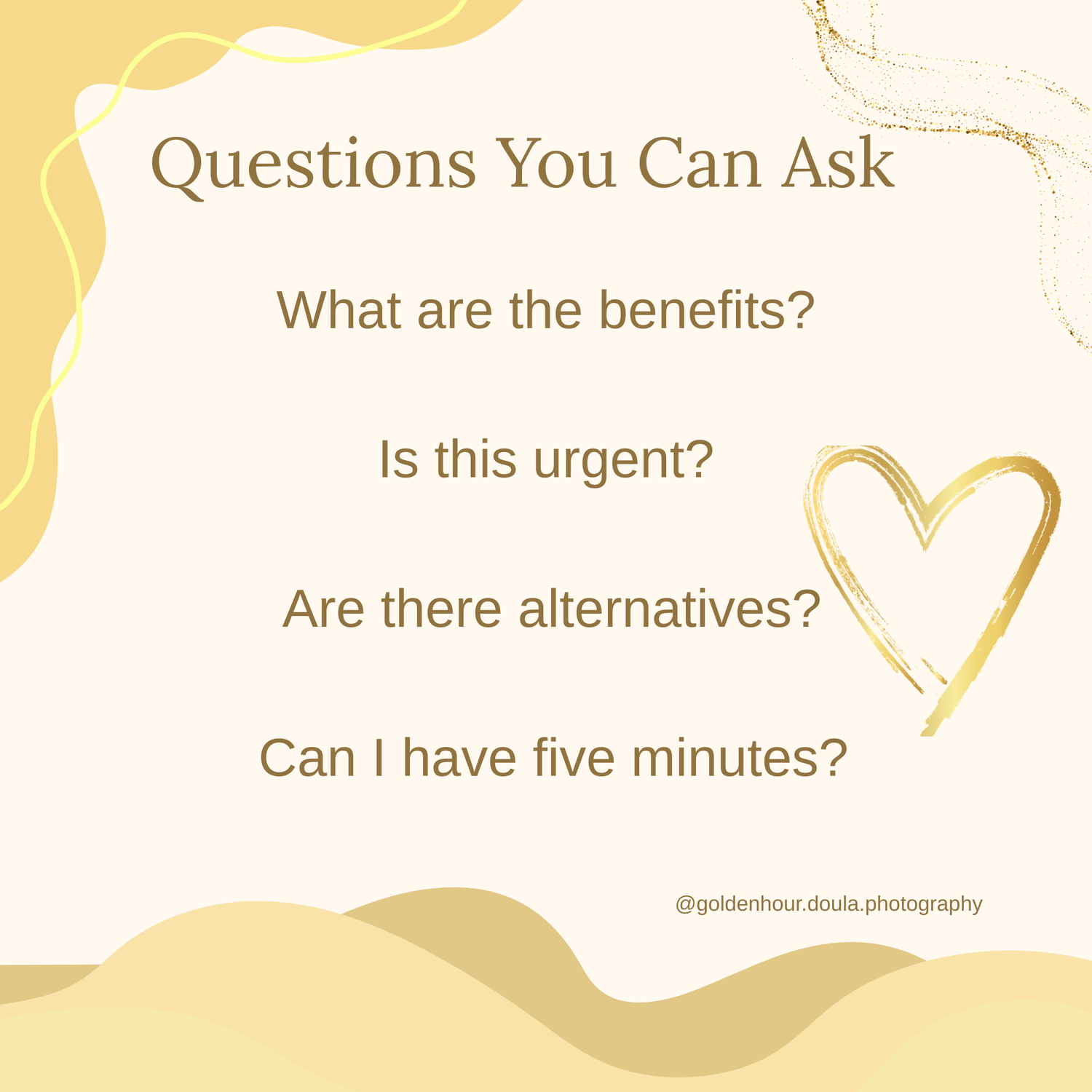
B - Benefits: What are the actual, proven benefits of this intervention for me and the baby right now?
R - Risks: What are the potential side effects or risks of this procedure?
A - Alternatives: What are other options? Can we try a position change, hydration, or simply waiting and monitoring?
I - Intuition: What does my gut tell me? Does this feel right for my body and my baby?
N - Nothing: What happens if we do nothing right now? Is it possible to wait, and if so, for how long?
By using this framework, the decision-making process becomes a conversation rather than a mandate. This is the essence of informed consent. My role is to ensure that Sarah understands that she has the right to accept, decline, or negotiate every single intervention offered to her.
Staying Within the Scope: Your Voice, Not Mine
One of the most important principles in doula training is the strict adherence to our "scope of practice." It is crucial to understand that a doula does not provide medical advice. I am not a doctor, midwife, or nurse. I cannot tell you what is "best" for your health or your baby’s safety—that is the sole responsibility of your medical team.
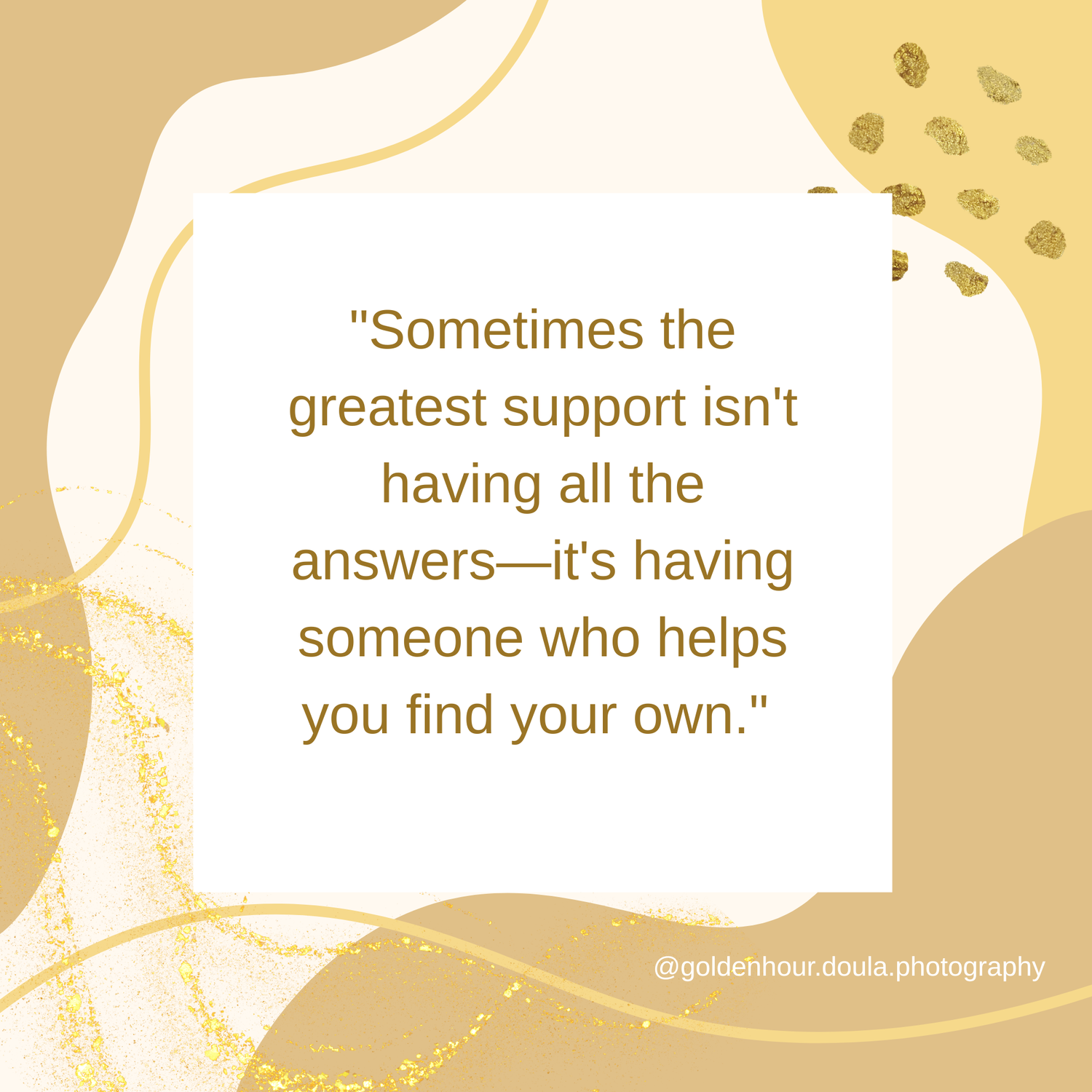
If I were to cross this line—if I were to say, “Don't take that medicine, it's unnecessary”—I would be overstepping, causing distrust between you and your care providers, and potentially endangering your safety. Instead, my role is to provide informational support. This means I can provide evidence-based literature, explain medical terminology, and help you translate what the doctors are saying. I am the bridge between the clinical language of the hospital and the human experience of the birthing person.
Professional Boundaries and Compassionate Presence
You might wonder: If things get intense, how does a doula remain professional? Maintaining professional boundaries is actually what allows me to be a "steady" presence. I remain non-judgmental and neutral. Whether you choose to accept an intervention or decline one, my role is to offer unconditional emotional support. I am not attached to the outcome of your birth—I am attached to you feeling heard, respected, and empowered.
During a difficult decision, I might offer physical comfort—a cool cloth, counter-pressure, or simply sitting quietly by your side. These small acts remind you that you are not alone, even when the situation feels chaotic. I act as a "vessel" for your emotions, holding the space for you to feel frustrated, scared, or uncertain, without taking those emotions on as my own. This requires a high degree of self-awareness and emotional regulation, ensuring that my own experiences or biases never cloud the support I provide to you.
The Long-Term Impact: Why This Matters
Why is this level of support so vital? Because birth is a memory that stays with a person for a lifetime. When a birthing person feels they have a say in their care—even when the birth does not go according to the original plan—they are significantly more likely to have a positive birth experience.
Conversely, feeling coerced or ignored can lead to feelings of trauma or resentment, which can impact the postpartum period, the bonding process, and even the ability to breastfeed or heal emotionally. By supporting your autonomy, I am not just helping you have a "good birth"; I am helping you protect your mental health as you transition into parenthood.
Navigating the Healthcare System
Understanding that you are a consumer of maternity care is often the first step toward empowerment. The hospital is a system with policies, protocols, and time pressures. Your doula helps you navigate these systems by reminding you that while policies are general guidelines, they are not laws that supersede your personal preference.
If you are facing a difficult choice, we can use these simple, empowering questions to engage your medical team:
"What is the clinical evidence supporting this recommendation in my specific situation?"
"Is this a recommendation based on an immediate medical emergency, or is it a routine preference?"
"Can you give me five minutes to discuss this with my partner?"
Remember, you are the expert on your body. You are the protagonist of your birth story. My role is simply to provide the evidence-based information and emotional armor you need to make the decisions that feel right for your family.
Resources for Your Journey
Knowledge is a powerful tool against fear. Here are a few places you can go to learn more about navigating hospital policies and medical decision-making:
Evidence Based Birth: An incredible library of articles that break down current research on common birth procedures. This is a must-read for any expectant parent wanting to understand the facts behind medical interventions.
Childbirth Connection: A program of the National Partnership for Women & Families, this site offers excellent, research-based guides on "Choosing Your Care Provider" and "Planning for Your Birth."
Birth Monopoly: A great resource for understanding your legal rights in the birth room and how to advocate for yourself within the maternity care system, even when policies feel rigid.
Science & Sensibility: A blog from Lamaze International that bridges the gap between research and the practical realities of childbirth.
You Are Capable
Birth may not always go to plan, but it is always your experience. Even in the midst of an unexpected turn, you are capable of making powerful, informed choices. With the right support, you can look back on your birth not as a series of things that happened "to" you, but as a journey you navigated with strength, grace, and autonomy.
As a doula, I stand ready to be that anchor. I am here to help you find your voice when it feels quiet, to provide you with the information you need to make the best decisions, and to hold the space for whatever path your birth takes. You are not just a patient; you are a person embarking on a life-changing event, and you deserve to be treated with the dignity and respect that journey demands.
Reflection for Practice
As a new doula, writing this essay has been a transformative exercise. It has helped me clarify my role and solidify my professional boundaries. I have learned that while I cannot change the medical outcomes of a birth, I have a profound impact on the way a person experiences those outcomes. By focusing on my ability to facilitate communication, hold space for silence, and remain a non-judgmental presence, I am prepared to act as a bridge between the clinical needs of the hospital and the human needs of the family.
I understand now that being a doula is not about being an expert in birth; it is about being an expert in support. It is about knowing when to speak up for my client’s preferences and when to step back so they can find their own inner strength. This realisation is what gives me confidence as I step into this work: the knowledge that the greatest gift I can offer a birthing person is the reminder that they are capable, they are informed, and they are in control of their own story.


You Deserve to Feel Held Too!
I’m Mon! Mother of five, doula and photographer behind Golden Hour.
I support women through pregnancy, birth and early motherhood with calm,
compassionate and personalised care.
You don’t have to navigate this season alone!
Whether you’re preparing for birth, welcoming your baby or simply
wanting more support along the way, I’d love to walk alongside you.
Held with love - Captured for a lifetime.
Ready to feel held?
Get in touch today to find out how Golden Hour can support you.